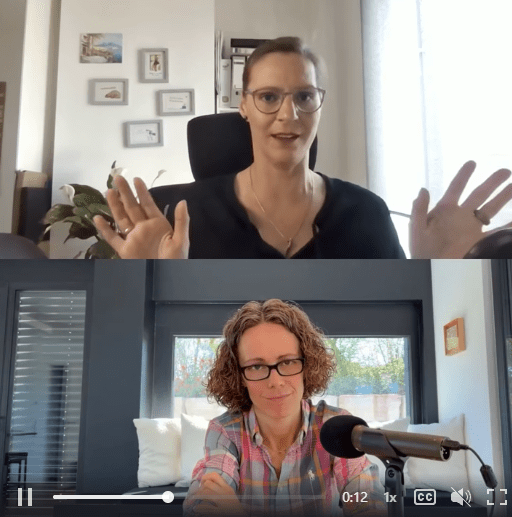
What a great last week — full of online intercultural workshops about Germany, Hungary and the US… Participants who will be new international professionals in healthcare – till a corportate general manager who is taking over a branch office.
I had nations on my screen from South Africa, India, Tunisia, Türkiye, Germany… Even after the weekend, I’m feeling blessed with my job and such a privilege to have the opportunity to work globally together — all through a screen!
But during the weekend I was (again) thinking a lot about the only real challenge which always remains in country-specific training:
❓ How to deal with not over-stereotyping and being careful with generalizations?
Because in almost every pre-query or expectation management request I read, they want to know about the dos and don’ts. And yes, some still exist — but that’s not intercultural training in the 21st century. In my opinion, if we handle it correctly, a lot can be apologized – but this is the 2nd step.
Before, that’s it after all: the participants’ goal is to learn about the differences between their home culture and the other culture. It does not help to say “ that not everyone is the same and that you should focus on the commonalities.“
The focus on commonalities comes after and is important and a fact of life — no question about that. But it’s not what is asked for in the first place.
📌 People want to be prepared to recognize the differences, and how can I deal with them when I move abroad?
🔎 So, in every country preparation workshop, this is a bittersweet challenge.
First of all, I deal with it through frank honesty and a trigger warning at the beginning: I cannot speak e.g. for around 83 million Germans / 340 million US-Americans or 10 millions of Hungarians… The disadvantage is that we need science-based generalizations and some of them corresponds with my own experiences.
But for sure, we should not lose sight of the individual — using tools such as the Hofstede Pyramid or the Intercultural Cocktail: the Culture–Person–Situation Model.
As interculturalists who are trying to combine science with practice — it is not that easy, and it is nearly impossible to squeeze all of it into a 4–6-hours workshop. We all know it’s a lifelong learning, and reflection takes time and needs to be connected with personal experiences.
💡 So, my dear colleagues, how are you feeling about and handling these challenges?
Which is your favourite tool to create awareness about differences while focusing on the commonalities at the same time?
I’d love to hear your thoughts and experiences!
View on LinkedIn